If you're planning a wedding in Bali, there's one question worth answering before you book a single vendor: will this ceremony actually be legally binding, or is it symbolic? For the great majority of foreign couples, the honest answer is symbolic — and that's completely normal. This article walks through why, what Indonesian law actually requires, and how to plan around it without any surprises.
This is general information, not legal advice. Indonesian civil procedures can and do change, so before you rely on anything here, confirm current requirements with your home country's embassy or consulate in Indonesia, and ideally with a Bali-based wedding planner or legal advisor who handles this regularly.
What "Legally Married in Bali" Actually Means
In Indonesia, a marriage only becomes legally recognized once it's registered through the civil system — and that registration has requirements that catch a lot of foreign couples off guard.
The ceremony itself — the vows on the clifftop, the exchange of rings at sunset, the traditional Balinese blessing — is not what makes a marriage legal in Indonesian eyes. What makes it legal is civil registration, and that process has a condition most secular Western couples don't expect.
The Same-Religion Requirement — the Single Most Important Fact Here
Indonesian civil marriage law requires that both partners be registered under the same officially recognized religion for the marriage to be legally registered in the country. Indonesia recognizes six official religions: Islam, Catholicism, Protestant Christianity, Hinduism, Buddhism, and Confucianism. There is no civil, secular marriage option in the way many Western countries offer.
If you and your partner already share one of these recognized religions, you can proceed toward legal marriage in Indonesia. If you don't, one partner can formally convert to match the other's religion — but this is a genuine, often significant step, not a paperwork formality, and it's a friction point many couples don't discover until they're deep into planning. It's not something to take on lightly or purely for administrative convenience.
Both parties also need to meet Indonesia's minimum legal age of 19.
Why Most Couples Skip the Legal Route in Bali — and Why That's Fine
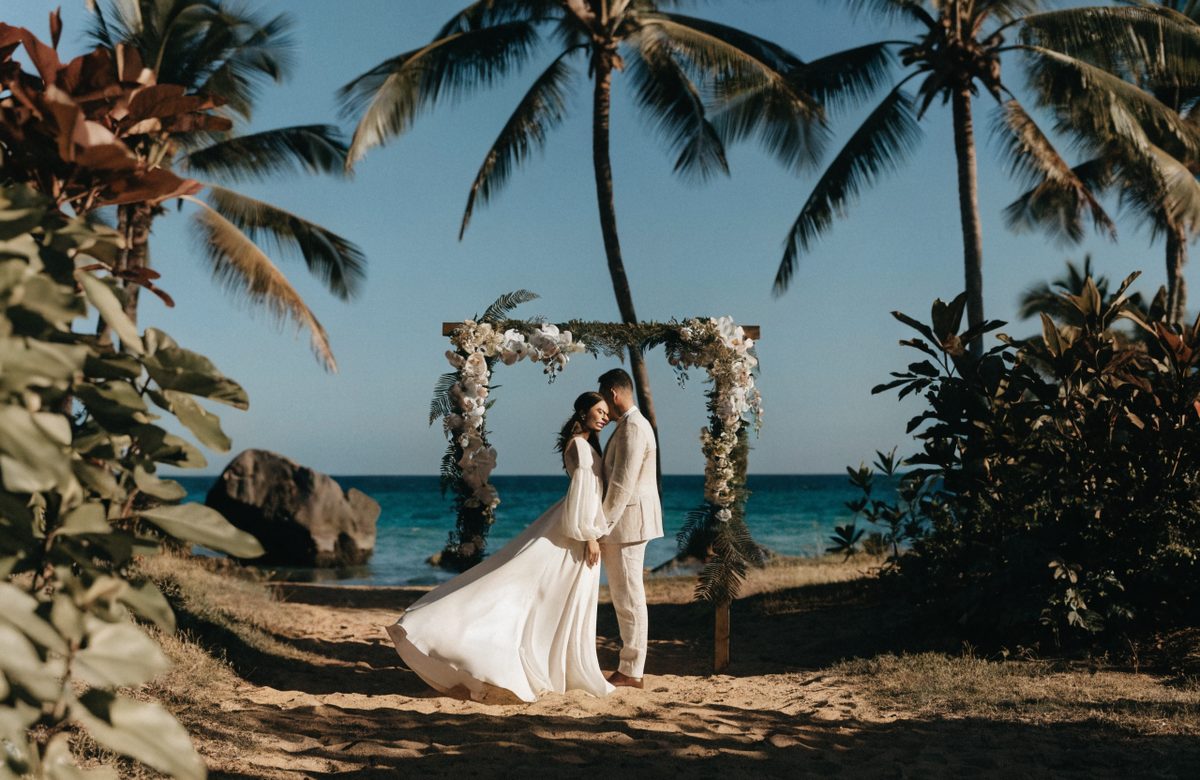
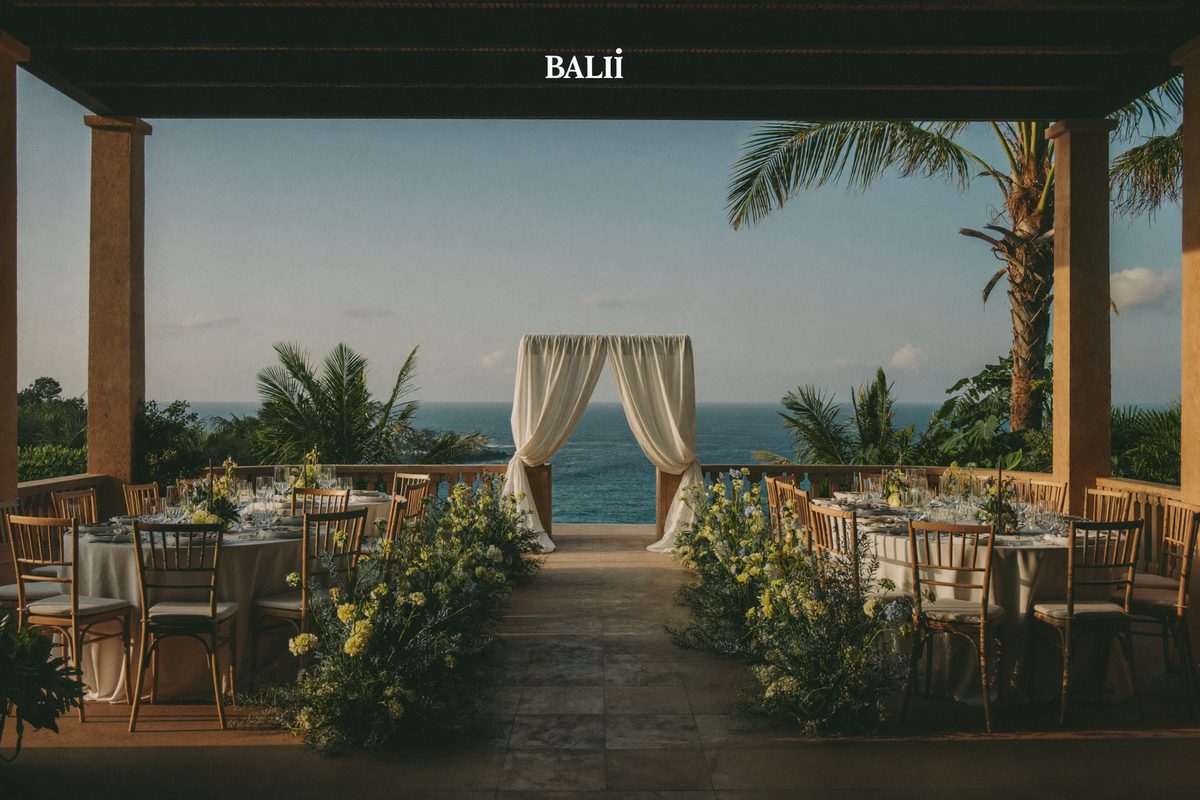
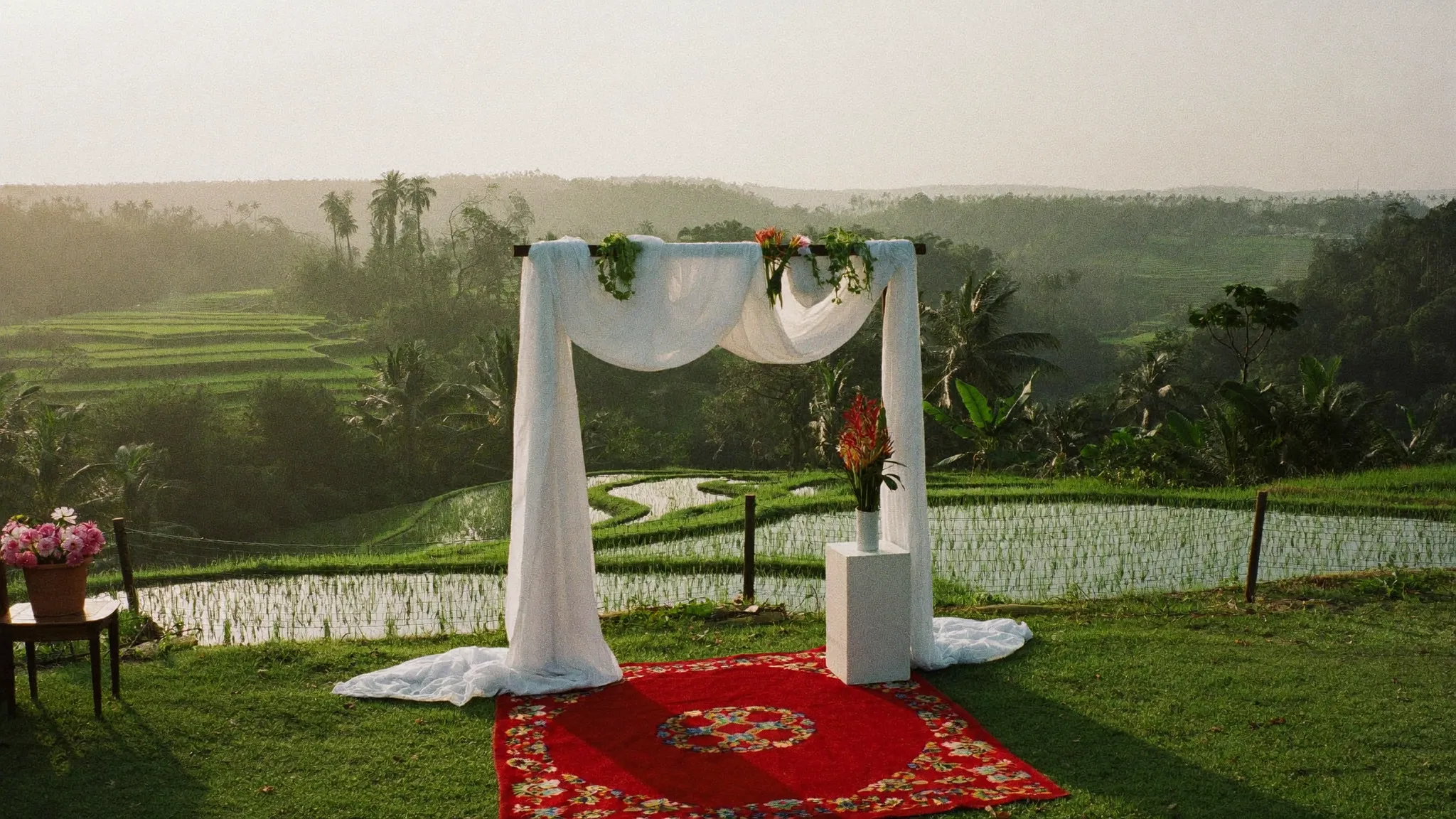
Because of the same-religion requirement, the majority of couples having a "Bali wedding" are having a beautiful, meaningful, photographed, toasted-to ceremony that is symbolic rather than legally binding under Indonesian law. Their actual legal marriage happens separately — either:
- Before they travel, via a standard civil or religious ceremony at home, or
- Around the trip, via a simple registry office appointment in their home country, sometimes just days before or after the Bali celebration.
This is extremely common practice in the destination wedding world generally, not something unique to Bali or something to feel embarrassed about. Plenty of couples getting married in Tuscany, Santorini, or the Caribbean do the same thing for similar reasons — local civil requirements don't line up neatly with a big destination celebration, so the legal paperwork and the party get separated.
The practical upside is real: you get the ceremony you actually want, in the setting you want, without needing to convert religions or navigate a foreign civil registry under time pressure. The legal marriage becomes a quiet, low-stress formality handled on your own turf, on your own timeline.
If this is the path you take, your Bali ceremony can still include real vows, a legal officiant standing in symbolically, exchange of rings, a marriage certificate-style keepsake for your ceremony — none of that requires Indonesian government involvement. Just be clear with your celebrant and guests that the legal marriage happened (or will happen) elsewhere, so there's no confusion about paperwork like name changes, visas, or spousal benefits, which all key off the legal marriage date, not the ceremony date.
If You Do Want to Legally Marry in Indonesia: The CNI and Document Checklist
Some couples do want the marriage itself, legally, to happen in Indonesia — often because they already share a recognized religion, because one partner is Indonesian, or because they're planning to live in Indonesia afterward. If that's you, here's the general shape of what's required, though you should verify specifics with your embassy before proceeding.
1. Certificate of No Impediment (CNI). This is the cornerstone document. It's issued by your home country's embassy or consulate in Indonesia and confirms that you are legally free to marry — i.e., not already married, and meeting your home country's requirements to marry. Indonesian civil registration cannot proceed without it. Processing times and exact requirements vary by nationality, so this should be one of the first things you look into, well ahead of your wedding date.
2. Valid passports for both parties, generally required to have a reasonable amount of validity remaining.
3. Certified divorce decree(s), if either party has been previously married and divorced.
4. A deceased spouse's death certificate, if either party is widowed.
5. Proof of shared registered religion, since this underpins the whole process — you'll need documentation showing both parties are registered under the same recognized religion, or evidence of a formal conversion if one partner has changed religion for this purpose.
Once these documents are in order and the CNI has been issued, the marriage can proceed to registration at the Civil Registry Office (Catatan Sipil). This is the government body that formally registers the marriage and issues the official Indonesian marriage certificate, known as the Akta Nikah. This certificate — not your wedding photos, not a ceremony program, not vendor paperwork — is the legal proof of marriage in Indonesia.
Because requirements can shift and vary by nationality and religion, this is exactly the kind of process where a local wedding planner or Indonesia-based legal advisor earns their fee — they'll know the current document list, typical timelines, and which government office to work with for your specific situation.
A Simple Decision Framework
If you're not sure which route makes sense, it usually comes down to two honest questions:
| Question | If yes | If no |
|---|---|---|
| Do you and your partner already share one of Indonesia's six recognized religions? | Legal marriage in Indonesia is possible — start the CNI process early | A symbolic Bali ceremony + legal marriage at home is the simpler path |
| Do you want your legal wedding date and ceremony date to be the same day? | You'll need to complete Indonesian civil registration before or around the ceremony | Most couples separate the two — legal marriage first (or after), Bali ceremony as the celebration |
For most secular or interfaith couples, the answer lands on: have the Bali wedding you're dreaming of as a symbolic ceremony, and take care of the legal marriage quietly at home, either shortly before or shortly after the trip. It removes religious-conversion pressure, removes foreign-bureaucracy timelines from your wedding planning, and lets your Bali day be entirely about the celebration.
Closing Practical Checklist
Before you lock in your Bali wedding plans, work through this:
- Decide upfront: symbolic ceremony + legal marriage elsewhere, or full legal marriage in Indonesia.
- If pursuing legal marriage in Indonesia, confirm you share a recognized religion, or understand what formal conversion would involve.
- Contact your embassy or consulate in Indonesia early to start the Certificate of No Impediment process — this has the longest lead time of anything on this list.
- Gather supporting documents: valid passports, divorce decrees, or death certificates as applicable.
- If going the symbolic route, schedule your legal marriage at home before or after your trip, and keep that certificate as your official proof of marriage for visas, name changes, and insurance.
- Talk to a Bali-based wedding planner or legal advisor if any part of your situation is non-standard — different nationality combinations, prior marriages, or religious conversion all add complexity worth getting professional eyes on.
- Verify everything here against current guidance from your embassy before you rely on it — procedures do change.
However you structure it, understanding this distinction early means no surprises later. Most couples who choose the symbolic-ceremony route say it was the right call: it let them focus entirely on the wedding they actually wanted, in the place they wanted it, without a foreign legal process shaping the day.